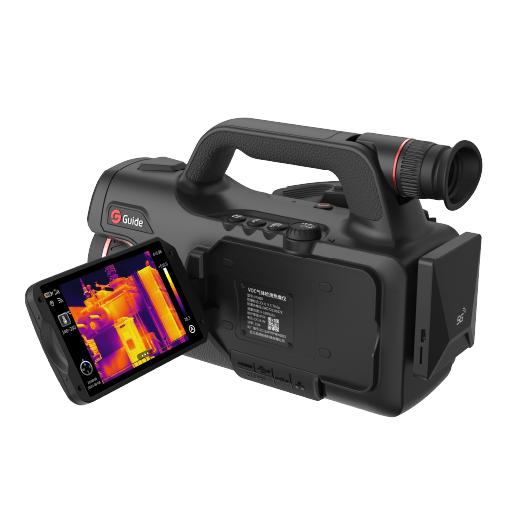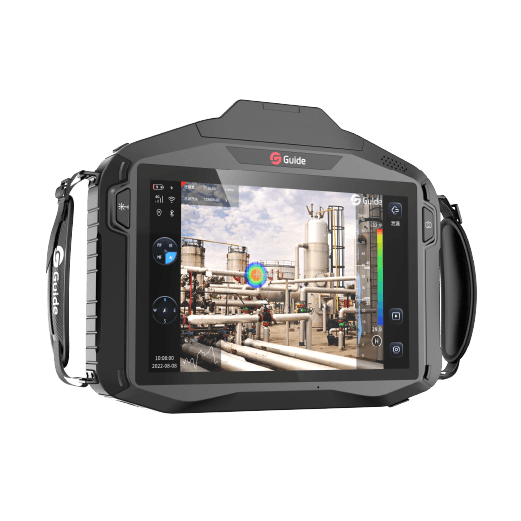





Defects Defection. Smarter Inspection.
Thermal Imaging Solution for the Power (Substation) Industry
Overview
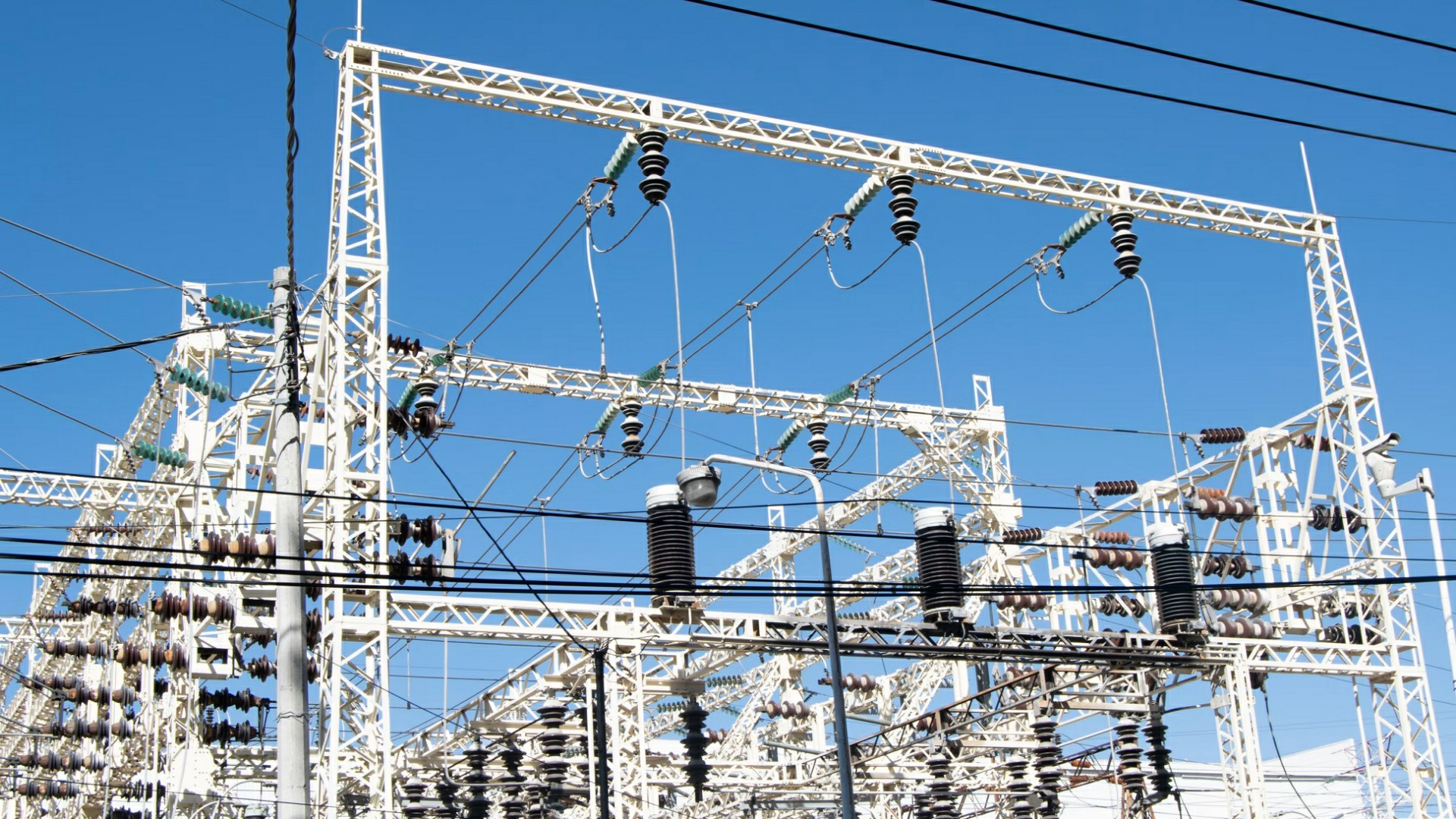
Substations play a critical role in the power system, serving as key hubs for voltage transformation, power distribution, and electricity transmission. Core assets such as transformers, gas-insulated switchgear (GIS), busbars, instrument transformers, and bushings operate continuously under high-voltage and high-current conditions. Over time, issues such as equipment aging, loose electrical connections, and insulation degradation can develop, potentially leading to power outages, equipment failures, or even widespread blackouts.
Thermal imaging technology has become a proven and widely adopted solution in the power industry. With its long-range, non-contact temperature measurement and intuitive visualization capabilities, it accurately detects abnormal temperature rises during equipment operation, enabling early identification of potential faults before they escalate. This supports predictive maintenance and helps ensure the safe, reliable, and stable operation of substation assets.
Thermal imaging technology has become a proven and widely adopted solution in the power industry. With its long-range, non-contact temperature measurement and intuitive visualization capabilities, it accurately detects abnormal temperature rises during equipment operation, enabling early identification of potential faults before they escalate. This supports predictive maintenance and helps ensure the safe, reliable, and stable operation of substation assets.
Transformer Temperature Monitoring
Background
Transformers are among the most critical assets in substations. Components such as bushings, transformer tanks, radiators, conservators, and high- and low-voltage terminals operate continuously under high-voltage and high-current conditions. Localized overheating may occur due to overload, loose electrical connections, or internal insulation aging. If left undetected, these thermal anomalies can lead to insulation breakdown, transformer fires, or even explosions.
Pain Points
- Traditional spot thermometers measure only a single point, making it difficult to detect localized hotspots.
- Energized bushings are installed at elevated positions, making close-range inspection hazardous.
- Sudden temperature rises cannot be captured in real time, leaving significant gaps in routine inspections.
.jpeg)
.jpeg)
Solution
For transformer temperature monitoring, a combined solution of handheld thermal inspection and fixed online thermal monitoring is recommended. Handheld thermal cameras enable operators to remotely scan critical components—including bushings, high- and low-voltage terminals, radiators, and transformer tanks—to quickly assess the overall temperature distribution. Online fixed thermal cameras are deployed on the bodies of critical transformers to enable continuous, 24/7 temperature monitoring.
Safe remote inspection: Enables panoramic transformer scanning from the ground without the need for climbing or power shutdown.
24/7 protection: Online monitoring captures sudden temperature rises in real time, eliminating inspection blind spots.
Predictive maintenance: Trend analysis helps identify potential issues in advance, preventing unplanned outages.
GIS Equipment Inspection
Background
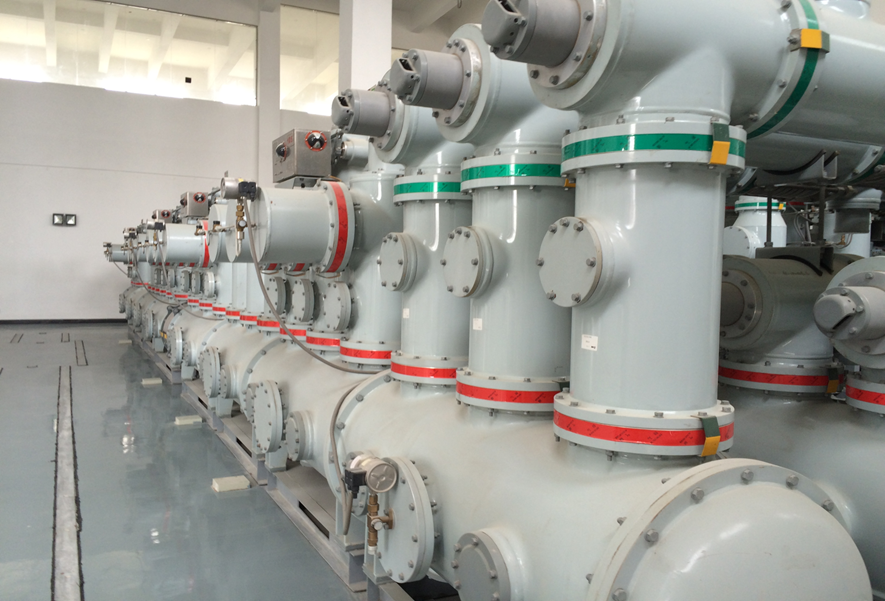
Gas-insulated switchgear (GIS) integrates high-voltage components such as circuit breakers, disconnectors, and busbars within a sealed metal enclosure, offering advantages such as a compact footprint and high operational reliability. However, internal issues such as gas leakage, poor contact at switching points, and insulator defects are difficult to detect through visual inspection. Once a failure occurs, it can lead to severe consequences and significant system disruptions.
Pain Points
- Sealed enclosure design makes internal defects impossible to identify through visual inspection.
- Conventional leak detectors cannot identify electrical defects such as overheating at contact points.
- Sudden internal faults cannot be detected in advance or effectively warned against.
.png)
Solution
For GIS equipment inspection, handheld thermal cameras are used to perform infrared scanning of key external components such as the GIS enclosure, gas compartments, and outgoing bushings. By analyzing the external thermal patterns, it is possible to indirectly assess internal conditions such as contact resistance at switching points and the status of busbar connections. In addition, surface temperature distribution of the GIS tank is recorded and analyzed.
Assisted diagnosis of internal defects: Internal contact conditions can be inferred through external surface temperature distribution.
Non-intrusive inspection: Enables full-scope scanning without power interruption.
Continuous monitoring: 24/7 real-time anomaly alerts.
Busbar Connection Inspection
Background
Busbars serve as the main pathways for power collection and distribution within substations. Their connection points carry high currents continuously and are susceptible to increased contact resistance caused by loose bolts, oxidation of contact surfaces, or improper installation. These issues can result in abnormal heating at the connection points. If overheating is not addressed promptly, it may trigger a busbar fault, leading to a total substation power outage.
Pain Points
- A large number of connection points make individual inspections time-consuming and labor-intensive.
- Overheating can escalate into a vicious cycle, increasing the risk of equipment failure.<br>
- Energized busbars make close-range inspection hazardous.
.jpeg)
.jpeg)
Solution
Thermal cameras enable routine infrared inspections of all busbar connection points, providing a clear view of the temperature distribution across each phase. By comparing temperature differences between phases, abnormal hotspots can be quickly identified. Combined with dual-spectrum image fusion of thermal and visible images, the exact location of the fault can be accurately pinpointed.
Inspection without power interruption: Perform comprehensive busbar inspections while the system remains energized.
Rapid screening: A single scan covers all connection points, significantly reducing inspection time.
Precise fault localization: Thermal and visible image fusion clearly identifies the exact location of abnormal connection points.
Current Transformer Thermal Inspection
Background
Current transformers play a critical role in reducing high primary currents to proportional secondary currents. During long-term operation, issues such as moisture ingress into the insulation, loose electrical connections, and core deterioration can lead to localized overheating. Failure to detect this in time will compromise the accuracy of relay protection and metering, and in severe cases, could lead to equipment explosion.
Pain Points
- Continuous full-load operation increases the risk of internal defects.
- Early-stage overheating shows only slight temperature rise, making faults difficult to detect.
- Conventional diagnostic methods may miss or misinterpret voltage-induced thermal faults.
.jpeg)
.jpeg)
Solution
Thermal Cameras enable comprehensive inspections of current transformer bodies and primary terminal blocks. By analyzing the surface temperature distribution shown in thermal images, they assist in assessing the condition of internal insulation and the operational status of electrical connections. Guide thermal cameras support the detection of temperature differences as small as 0.015°C, effectively capturing early signs of potential overheating issues.
Non-contact safety inspection: Enables scanning under energized operating conditions.
Micro-temperature difference detection: Accurately identifies early-stage internal insulation defects.
Intuitive and efficient: Thermal images provide clear visualization, reducing reliance on operator experience.
Voltage Transformer Thermal Inspection
Background
Voltage transformers are used to step down high voltages proportionally for use by measuring instruments and protective devices. During long-term operation, faults such as internal insulation degradation, core overheating, and loose terminals can easily lead to abnormal temperature rises, thereby affecting equipment lifespan and system safety.
Pain Points
- Internal defects in the core and insulation cannot be visually identified.
- Voltage-induced thermal faults are difficult to diagnose.
- Special insulation structures make diagnostic analysis more complex.
.jpeg)
.jpeg)
Solution
Thermal cameras enable infrared inspection of voltage transformers’ main body, primary terminals, and secondary terminal boxes. By comparing temperature differences across the three phases, abnormal heating phases can be quickly identified. Combined with intelligent image processing algorithms, thermal cameras clearly visualize areas of abnormal temperature rise.
Intuitive phase comparison: Simultaneous display of three phases makes differences immediately apparent.
Precise defect localization: Small hotspot anomalies are clearly visible and accurately detected.
Energized inspection: No power outage required. Does not affect the continuity of power supply.
High-Voltage Bushing Thermal Inspection
Background
High-voltage bushings are critical external insulation components used in transformers, circuit breakers, and GIS equipment. They are subjected to both high voltage and heavy current stress during operation. Defects such as internal insulation moisture ingress, low oil level, and aging of the capacitive core can manifest as abnormal thermal patterns, making bushings one of the most common sources of heating faults in substation equipment.
Pain Points
- Bushings are installed at elevated positions, making close-range inspection hazardous.
- Early-stage moisture ingress and insulation aging produce subtle temperature rises that are easily overlooked.
- Single-point temperature measurement cannot reflect the overall thermal distribution.
.jpeg)
.jpeg)
Solution
Thermal cameras enable long-distance inspection of high-voltage bushings. The uniformity of surface temperature distribution can be used as an indicator of internal insulation conditions. In normal operation, bushings exhibit a uniform temperature profile along the surface, whereas defective bushings may show localized hot spots or overall temperature deviation. Thermal imaging clearly presents the overall thermal field of the bushing, assisting engineers in rapid condition assessment and decision-making.
Remote inspection: Bushing inspection can be completed from ground level, ensuring both safety and efficiency.
Thermal field visualization: Temperature distribution is clearly displayed, ensuring no localized hotspots are missed.
Live-line inspection: Enables diagnostics under energized operating conditions without power interruption.

.png)
.png)