




How Thermal Imaging Cameras Help Identify Common HVAC Problems


Heating, ventilation, and air conditioning (HVAC) systems are essential for maintaining a comfortable indoor environment. However, many HVAC issues occur within the equipment, air ducts, pipes, or building structure, making them difficult to detect using traditional methods.
Thermal cameras for HVAC inspection enable technicians to visualize temperature distribution and identify potential problems without dismantling the system. By detecting abnormal heat patterns, thermal imaging technology not only improves maintenance efficiency but also helps prevent unexpected failures.
How Thermal Imaging Cameras Work in HVAC Inspections
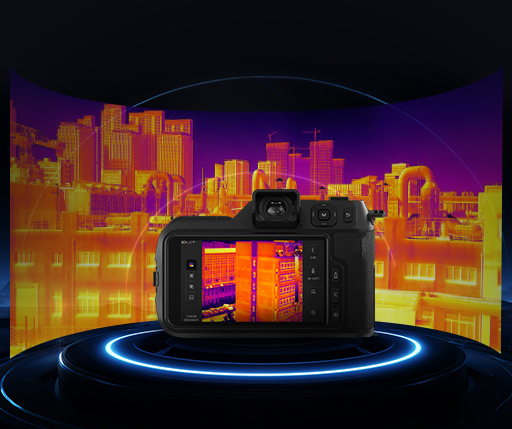
Thermal imaging cameras detect infrared energy emitted from objects and convert temperature differences into visible thermal images.
Unlike traditional inspection tools, thermal imaging technology can quickly show areas with temperature anomalies, heat loss, uneven cooling, or abnormal heating.
During HVAC system inspections, technicians can use thermal cameras to check air conditioning units, heating systems, ventilation ducts, pipes, and electrical components.
This non-contact inspection method not only accelerates troubleshooting but also reduces unnecessary equipment disassembly.
Detecting Insulation Problems in HVAC Systems
Effective insulation is crucial for the efficient operation of HVAC systems. Damaged or insufficient insulation can cause heat loss and increase energy consumption.
Thermal imaging cameras can identify abnormal surface temperature patterns caused by insulation problems, covering areas such as:
l Air ducts
l Refrigerant pipes
l Heating pipes
l HVAC equipment surfaces
Early detection of insulation issues helps improve system performance and reduce energy waste.
Detecting Air Leakage in Duct Systems
Ductwork leaks reduce the efficiency of HVAC systems and increase operating costs.
Thermal cameras used for HVAC inspections can detect abnormal thermal patterns around duct connections, air outlets, and insulated surfaces.
By locating possible leakage areas without opening walls or ceilings, technicians can perform inspections more efficiently.
Detecting Equipment Performance Issues
HVAC systems include compressors, motors, fans, coils, and control components. Abnormal operation of these components can result in unusual temperature patterns.
Thermal imaging cameras help identify the following:
l Overheating components
l Uneven heat distribution
l Abnormal cooling performance
l Temperature differences between similar components
These thermal signs provide valuable information for preventive maintenance.
Detecting Moisture and Electrical Problems
Moisture and electrical issues are common concerns in HVAC systems.
Thermal imaging technology helps locate areas with abnormal temperature patterns, which are often associated with condensation, moisture accumulation, or overheating electrical components.
When used alongside other inspection tools, handheld thermal cameras provide technicians with additional information, enabling accurate troubleshooting.
Benefits of Thermal Imaging Cameras in HVAC Maintenance
Using thermal imaging cameras for HVAC inspections provides several advantages:
l Faster problem identification
l Non-destructive inspection
l Improved preventive maintenance
l Better energy efficiency analysis
l Reduced troubleshooting time
Thermal imaging technology enables technicians to make maintenance decisions based on intuitive temperature data, rather than relying only on visual inspection.
How Guide Sensmart Thermal Cameras Support HVAC Professionals
Modern HVAC maintenance requires accurate and efficient temperature analysis. Guide Sensmart thermal cameras enable professionals to quickly identify abnormal temperature patterns and improve inspection workflows.
During HVAC maintenance, Guide Sensmart thermal imaging solutions can be used to inspect air conditioning systems, ventilation equipment, pipelines, electrical components, and insulation conditions.
By providing clear thermal images and reliable temperature data, Guide Sensmart helps maintenance teams locate potential issues faster and supports smarter preventive maintenance.
Conclusion
Thermal cameras are powerful tools for identifying common HVAC issues, ranging from insulation damage, air leaks, and uneven temperature distribution to moisture risks and electrical anomalies.
Thanks to their rapid, non-contact temperature measurement capabilities, thermal cameras used for HVAC inspections significantly enhance the efficiency and accuracy of maintenance operations.
As the construction industry places increasing focus on energy efficiency and smart maintenance, thermal imaging technology will play an increasingly vital role in improving HVAC system performance. The solutions offered by Guide Sensmart provide professionals with reliable tools for conducting modern HVAC inspections.
.jpg)
.jpg)


