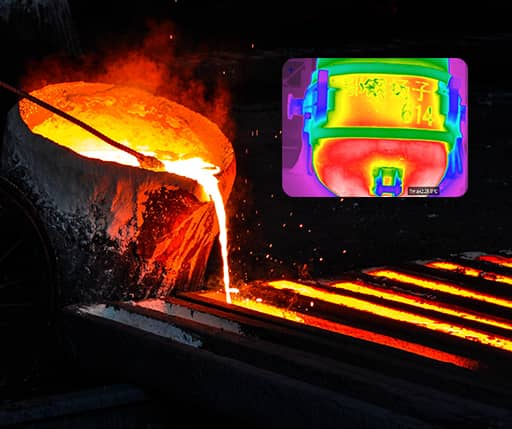
Thermal Imaging for Fire Prevention: Identifying Overheating Risks


In factories, commercial buildings, warehouses, power facilities, and other workplaces, fire safety is a critical component of overall safety management. Many fires are linked to the overheating of electrical equipment, mechanical failures, or abnormal operating conditions. In some cases, these problems develop gradually before visible smoke or flames appear.
Regular inspections help identify potential risks before they escalate into serious problems. However, manually inspecting each piece of equipment is often very time-consuming, especially in large facilities with complex electrical and mechanical systems.
Thermal imaging provides a non-contact inspection method that helps identify unusual temperature patterns on equipment surfaces. By using thermal imaging cameras for fire prevention inspections, maintenance teams can promptly identify areas prone to overheating, allowing them to schedule further investigation and corrective action before minor issues evolve into major safety hazards.
Why Overheating Is a Potential Fire Risk
Overheating can occur when electrical components carry excessive current, connections become loose, equipment is overloaded, or mechanical parts generate excessive friction. Furthermore, factors such as damaged insulation, poor ventilation, and the accumulation of dust can also cause equipment operating temperatures to rise.
If left unaddressed, excessive heat can damage equipment and, under certain conditions, increase the risk of fire.
For example, loose electrical connections may increase contact resistance, generating additional heat, which in turn causes additional heat; and a motor with worn bearings may also experience abnormal temperatures due to increased friction.
These issues are often difficult to detect through visual inspection alone. By using thermal imaging technology, maintenance personnel can pinpoint areas with abnormally high temperatures that require attention.
Detecting Overheating in Electrical Equipment
Electrical systems are among the important areas to include in fire prevention inspections. Abnormal temperatures can occur in distribution boards, circuit breakers, transformers, switches, and cable connections.
Using a thermal camera, technicians can scan various accessible electrical components without direct contact. These cameras provide a visual representation of temperature variations across electrical connections, individual components, and similar circuits operating under comparable loads.
Common warning signs include:
l Higher temperatures at cable connections than at comparable connections.
l Abnormally hotspots on circuit breakers.
l Uneven temperature distribution across components of a power distribution assembly.
l Excessive heat around switches or terminals.
l Temperature differences between phases under similar operating conditions.
These findings may indicate loose connections, excessive electrical loads, component aging, or other electrical problems. Technicians should employ appropriate electrical testing methods to examine these areas of concern.
Electrical inspections must be performed by qualified personnel following proper safety procedures. Thermal imaging cameras are not a substitute for electrical measurements or safety isolation procedures.
Checking Mechanical Equipment for Abnormal Heat
Overheating in mechanical equipment can increase the risk of equipment damage and, in certain circumstances, fire. Motors, bearings, pumps, fans, compressors, and various types of rotating machinery may experience abnormal temperature increases due to factors such as friction, poor lubrication, misalignment, or excessive load.
By using thermal imaging technology, maintenance teams can monitor the surface temperatures of accessible mechanical components while equipment is operating.
For example, if the temperature of a bearing is significantly higher than that of other bearings of the same type, it may indicate a lubrication problem or mechanical wear. An electric motor with unusual temperature distribution may need further inspection for ventilation problems, overloading, or internal faults.
Conducting regular thermal imaging inspections helps identify these early warning signs, facilitating proactive, preventive maintenance. Addressing abnormal heating early may reduce equipment damage and lower the risk of heat-related incidents.
Inspecting Critical Facilities and High-Risk Areas
In factories and industrial facilities, equipment often operates continuously or under heavy loads. Areas such as electrical distribution rooms, machinery rooms, production lines, and equipment enclosures may require regular temperature checks.
Firefighting thermal imaging cameras can be used to inspect accessible surfaces around these critical facilities to detect abnormal heat build-ups.
For example, technicians can use thermal imaging cameras to inspect electrical cabinets, motor housings, ventilation equipment, and mechanical connections. In warehouses, inspections may also focus on electrical distribution areas and equipment that operates for long periods.
Thermal imaging can help prioritize maintenance work by showing which areas have unusual temperature patterns. However, it cannot identify all potential fire hazards; other inspection and detection methods are required for addressing flammable materials, concealed heat sources, smoke, and combustible gases.
Using Thermal Imaging for Routine Fire Prevention Inspections
Thermal imaging is most effective when integrated into a regular inspection and maintenance program. A single thermal image may show an unusual temperature, but repeated inspections provide more information about changes over time.
Maintenance teams can follow several practical steps:
l Establish normal operating conditions: Record the temperatures of equipment while it is running under typical loads.
l Scan critical equipment: Inspect electrical connections, motors, bearings, and other vital components.
l Compare similar components: Observe whether there are temperature differences between pieces of equipment operating under comparable conditions.
l Record unusual findings: Save thermal images and note the equipment's operating conditions.
l Schedule further investigation: Use electrical measurements, mechanical inspections, or other diagnostic methods to confirm suspected problems.
l Follow up after repairs: Conduct follow-up inspections to ensure that the temperature anomalies have been resolved.
This approach helps maintenance teams identify developing problems and keep useful inspection records.
Selecting the Right Infrared Thermal Camera for Overheating Detection
The choice of an appropriate infrared thermal camera depends on the specific inspection environment and the equipment being checked.
Key factors to consider include temperature measurement range, thermal sensitivity, image resolution, measurement accuracy, and working distance. When inspecting small electrical connections, image resolution and the ability to detect minute hotspots are particularly important.
For large industrial facilities, selecting a device with an suitable temperature range and the capability to produce clear thermal images enables technicians to inspect various assets more efficiently.
Furthermore, users should be aware of the limitations of infrared thermal cameras. Surface temperature readings can be influenced by factors such as emissivity, reflections, viewing angle, distance, and environmental conditions. Inspection results should therefore be interpreted according to the equipment's operating state and manufacturer recommendations.
Thermal Imaging Cannot Replace Fire Protection Systems
Although thermal imaging technology is useful for identifying overheating risks, it is not a substitute for fire alarm or fire suppression systems.
Thermal cameras used for routine equipment inspections cannot automatically detect smoke, flames, or the early stages of a fire; nor can they guarantee that the inspected area is entirely free of fire hazards.
Facilities must still be equipped with comprehensive fire prevention and protection measures, including smoke detectors, heat detectors, fire alarms, automatic sprinkler systems, fire extinguishers, and emergency response plans.
Thermal imaging should be treated as an additional inspection tool that supports equipment maintenance and risk identification. It is most effective when integrated with electrical safety checks, mechanical maintenance, fire risk assessments, and established fire protection systems.
Conclusion
Thermal imaging aids in fire prevention by helping maintenance teams identify abnormal temperature increases in electrical equipment, mechanical components, and other critical infrastructure. It makes hidden hotspots easier to detect, allowing teams to determine which areas require further inspection or maintenance.
However, thermal cameras are only an auxiliary risk screening tool. They cannot replace fire alarms, smoke detectors, automatic fire suppression systems, or professional safety inspections. When used as part of a complete fire prevention program, thermal imaging can help facilities identify overheating problems earlier and improve equipment safety.