




How Thermal Imaging Can Improve Your Camping Experience


Camping is a great way to enjoy nature, but outdoor conditions can change quickly after sunset. Low temperatures, poor visibility, and sudden equipment malfunctions can all compromise comfort. Thermal imaging technology offers a practical means of observing temperature differences in the outdoors, helping campers make more informed decisions regarding comfort, gear usage, and nighttime activities.
Thermal imaging cameras detect infrared radiation emitted by objects and visualize their surface temperatures. Unlike visible-light cameras, they can produce images without relying on visible light. This capability makes thermal imaging highly valuable in various camping scenarios, particularly at night.
Observe Heat Sources at Night
After sunset, it can be difficult to see objects clearly around a campsite. A thermal imaging device can help users locate warm objects by showing differences between their surface temperatures and the surrounding environment.
For example, campers can use thermal imaging cameras to observe warm rocks near a recently extinguished campfire, locate a recently used cooking area, or check whether equipment has retained heat. Such informationmos is highly useful when moving around a dimly lit campsite.
Thermal imaging may also help users notice temperature differences on nearby trees, rocks, and ground surfaces.
However, thermal imaging technology is not a substitute for basic camping safety practices. It cannot guarantee that an area is free of people, animals, obstacles, or other hazards.
Check Tent Insulation and Heat Retention
Staying warm is one of the main challenges when camping in cold weather. A tent's heat retention is influenced by various factors, including its fabric, seams, doors, ventilation openings, and ground contact.
A thermal camera for camping can show temperature differences across the tent's exterior or interior surfaces. Under the right conditions, areas of unusually low temperature may indicate rapid heat loss or the impact of cold air on the tent fabric.
For example, campers can compare different sections of the tent wall, inspect the door area, and check the floor perimeter for uneven temperature patterns. These observations help identify areas where insulation needs reinforcement or windproofing measures could be improved, thereby enhancing overall comfort.
However, thermal imaging cameras measure surface temperatures rather than directly measuring insulation performance. Factors such as wind, humidity, sunlight, fabric material, and the temperature difference between the inside and outside can all affect the results.
A thermal image should therefore be treated as a visual guide, not a precise measurement of how well a tent retains heat.
Monitor Camping Equipment
Camping equipment can become hot during use or remain warm after being switched off. Thermal imaging offers a convenient way to monitor these temperature changes without touching potentially hot surfaces.
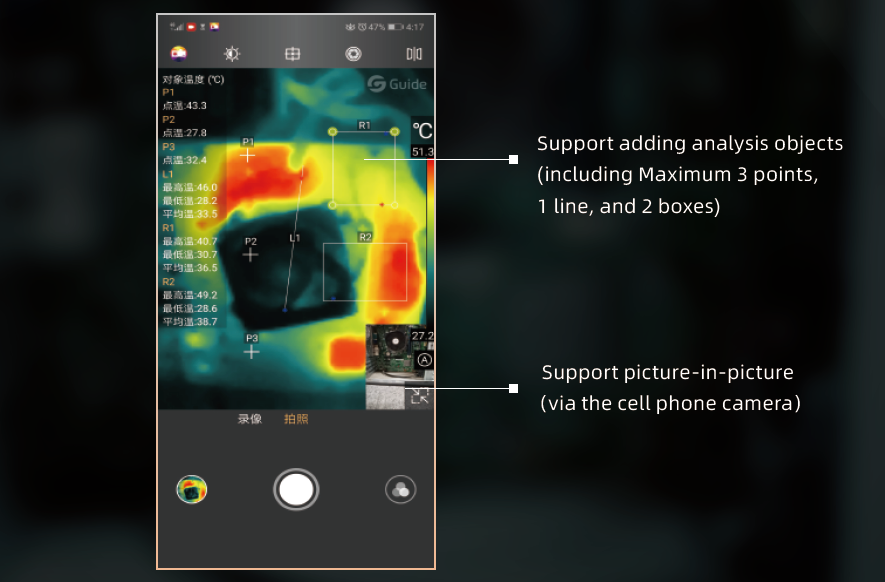
Campers can use a smartphone thermal camera to check the surface temperature of portable power stations, electronic device casings, or cooking appliances after use. Unusual heat distribution may suggest that an item deserves closer inspection.
For example, a localized hot area on a power device could signal an anomaly, although the thermal image alone cannot pinpoint the exact cause. Users should follow the manufacturer's instructions and stop using equipment if there are signs of damage, swelling, smoke, or an unusual smell.
Thermal imaging also helps compare the temperature of camping gear before and after use, which is useful for evaluating performance in cold outdoor environments.
Never rely on thermal imaging alone to determine whether a gas appliance is leaking or whether electrical equipment is safe. Use appropriate detectors and follow the required safety procedures.
Check Your Vehicle Before and During a Trip
Vehicles are often a crucial part of the camping experience, especially when traveling to remote campsites. Temperature changes around certain vehicle components may provide useful clues during a visual check.
Using thermal imaging cameras helps to observe easily accessible areas such as the engine compartment, wheel hub area, and specific components around the vehicle body after it has been driven. Unexpected temperature differences may indicate that further inspection is needed.
For example, if one wheel is significantly hotter than the others after a similar driving stint, it warrants attention. Possible causes can include brake drag or other mechanical issues, but temperature alone cannot identify the exact fault.
Thermal imaging can also be useful when checking vehicle camping accessories, such as powered coolers or auxiliary electrical equipment, for unusual surface heating.
These checks are supplementary. They do not replace regular vehicle maintenance, dashboard warnings, tire-pressure checks, or professional diagnosis.
Improve Nighttime Awareness Around Camp
In dimly lit campsites, low visibility often makes it difficult to detect warm objects. Thermal imaging technology allows campers to observe temperature differences without turning on a bright light.
This may be useful when checking the general area around a tent, looking for recently used equipment, or observing a trail from a safe, stationary position. When camping outdoors, a compact thermal imaging device can be convenient for camping.
Campers should use thermal imaging as an additional observation tool, keep a regular flashlight available, and avoid approaching wildlife based on a thermal image alone.
Choose the Right Thermal Imaging Device for Camping
The best thermal imaging device for camping depends on how it will be used.
Key factors to consider when purchasing include thermal resolution, battery life, weight, operating temperature range, image clarity, and ease of use.
Before purchasing a thermal imaging camera for outdoor camping, clarify your primary needs: nighttime observation, equipment inspection, or temperature comparison. A device designed for outdoor observation may not provide the measurement features needed for detailed equipment inspections.
Additionally, check the manufacturer's specifications regarding weather resistance and operating conditions. Not every thermal imaging product is designed to withstand heavy rain, freezing temperatures, or rough outdoor handling.
Conclusion
Thermal imaging technology can make camping more convenient, helping users detect heat sources at night, monitor temperature distribution inside the tent, inspect camping gear, and identify unusual temperature differences around their vehicles.
While thermal imaging is particularly useful in low-light conditions, it cannot replace flashlights, essential measures for staying warm, equipment maintenance, or standard outdoor safety practices. By choosing a suitable thermal imaging device and understanding its limitations, campers can use thermal imaging as a practical addition to their outdoor gear.
.jpg)
.jpg)


